
Raftball —
ball game on water.
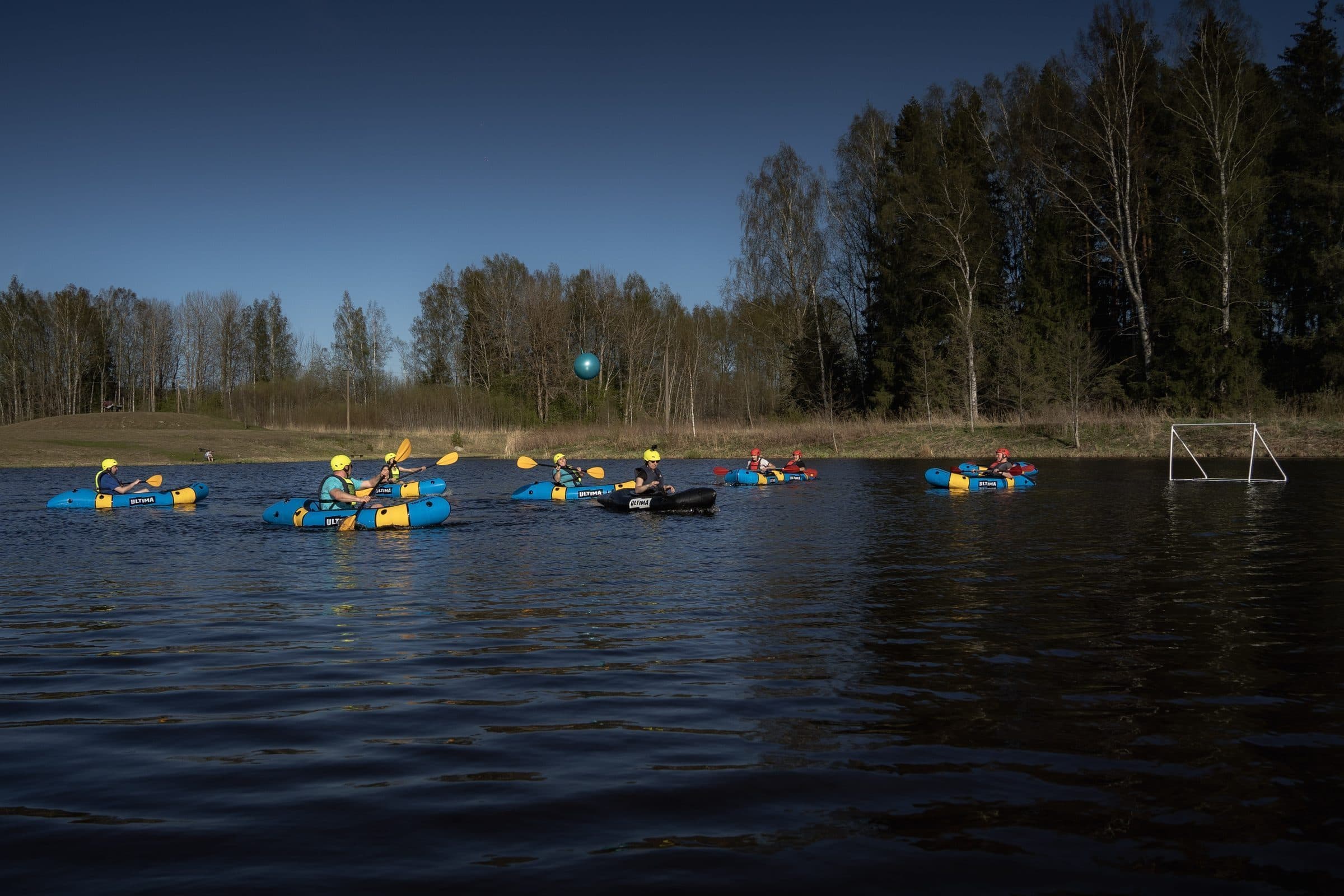
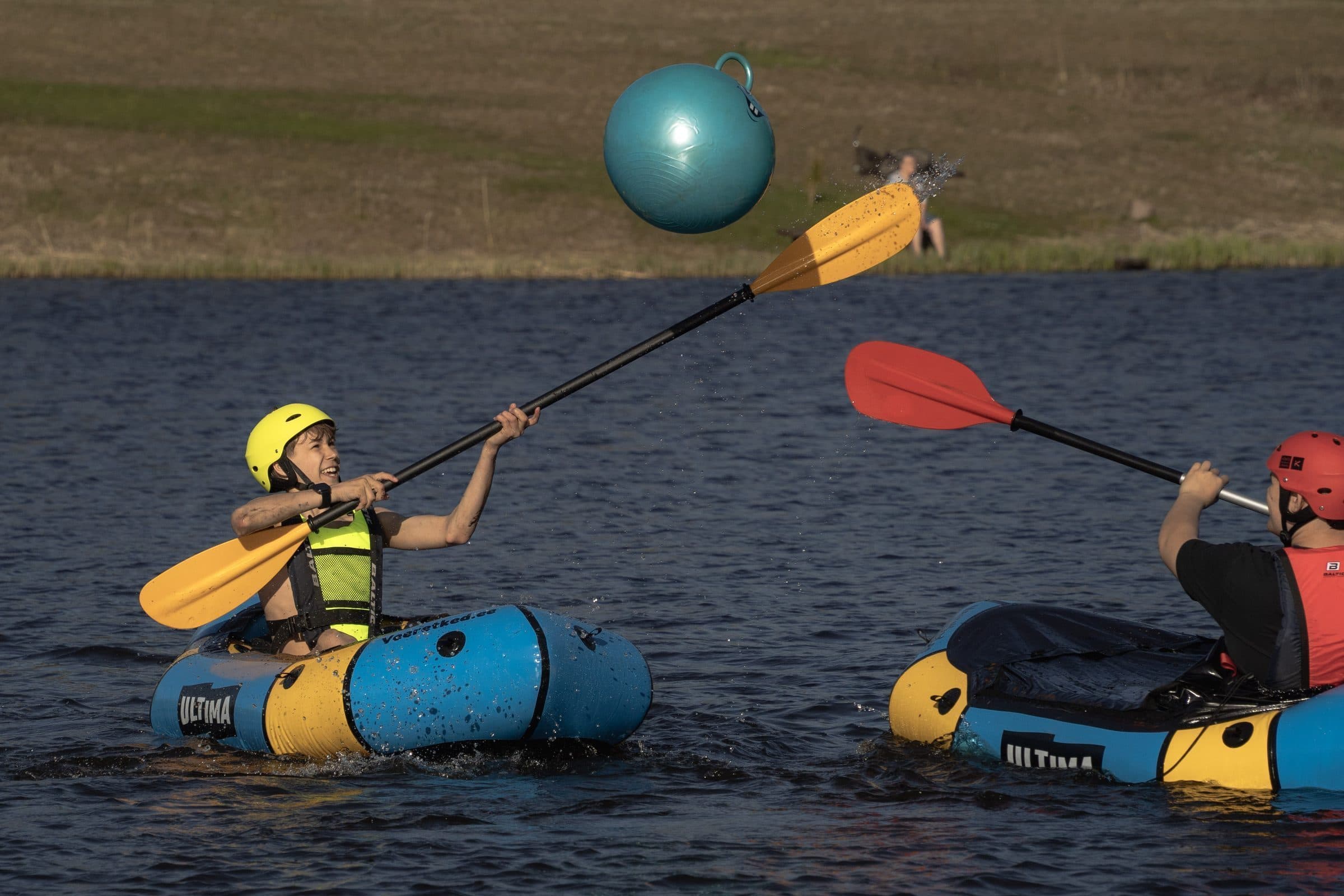
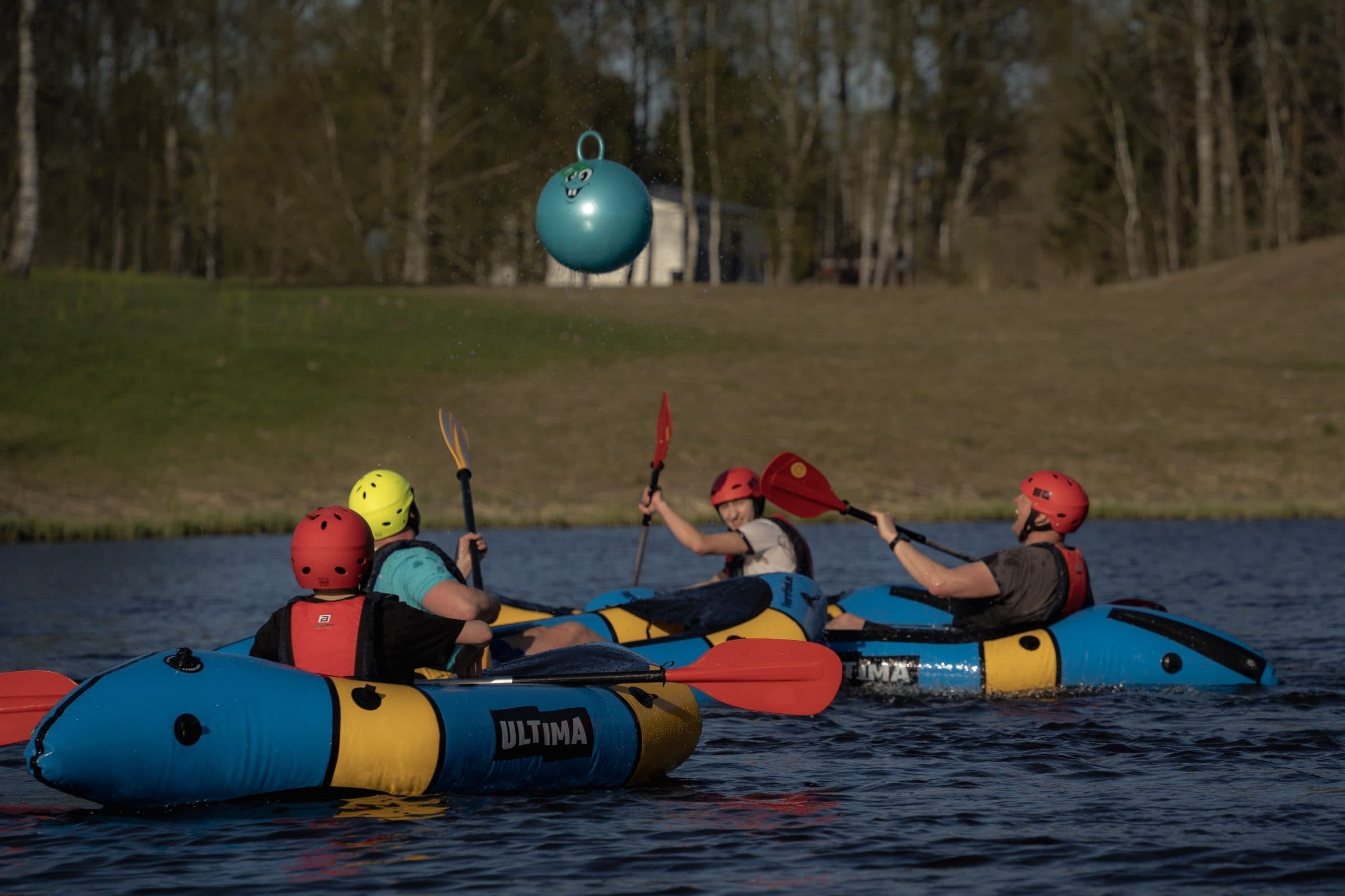
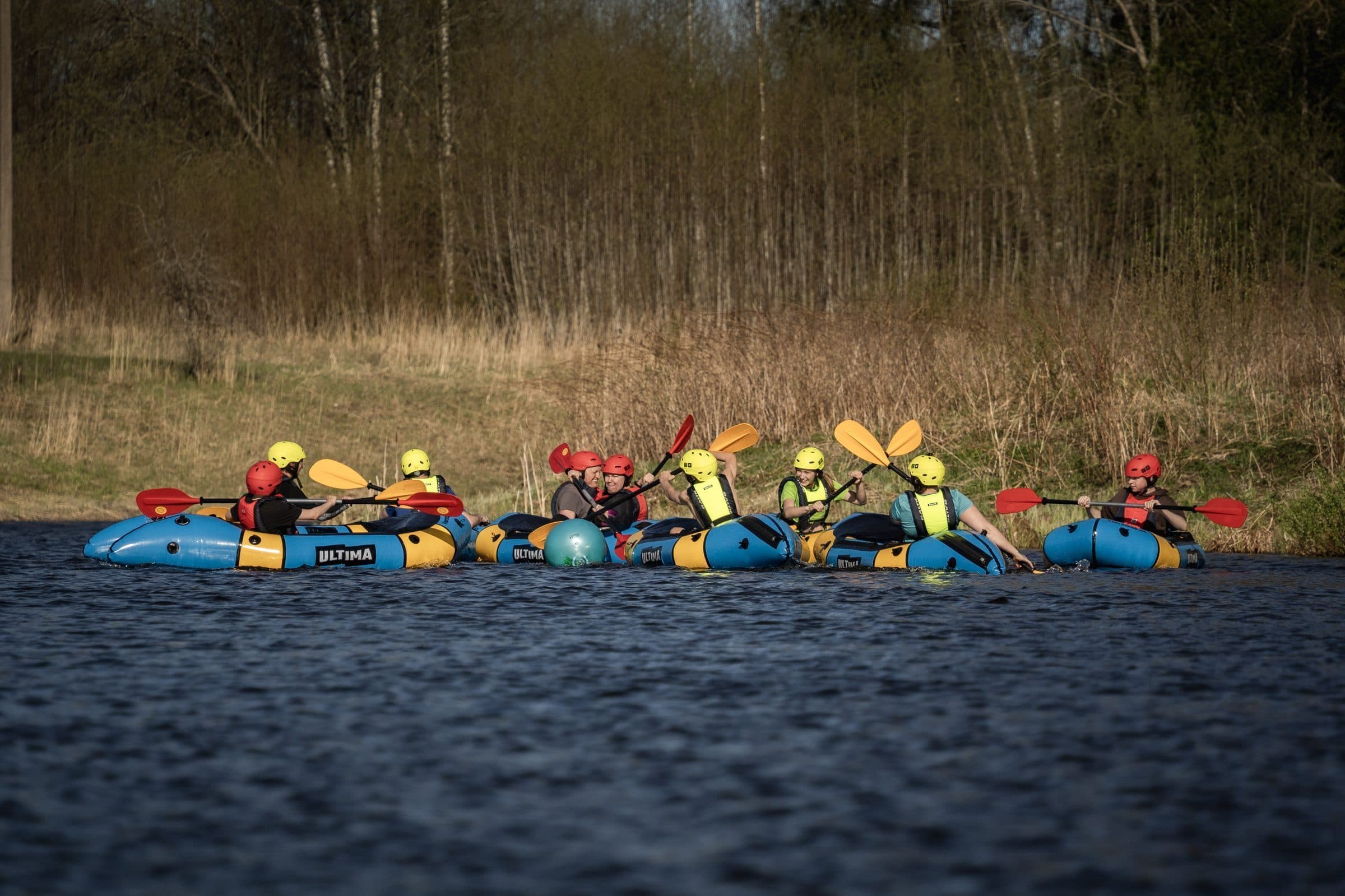
Raftball blends teamwork, the thrill of bumper cars you remember from childhood, and a refreshing splash of cool water into one unforgettable experience. Players ride packrafts and try to score — or ram the ball — into the opposing team's goal, all while floating on the water. Laughter, adrenaline, and pure excitement are guaranteed, creating memories your team will talk about for years to come.
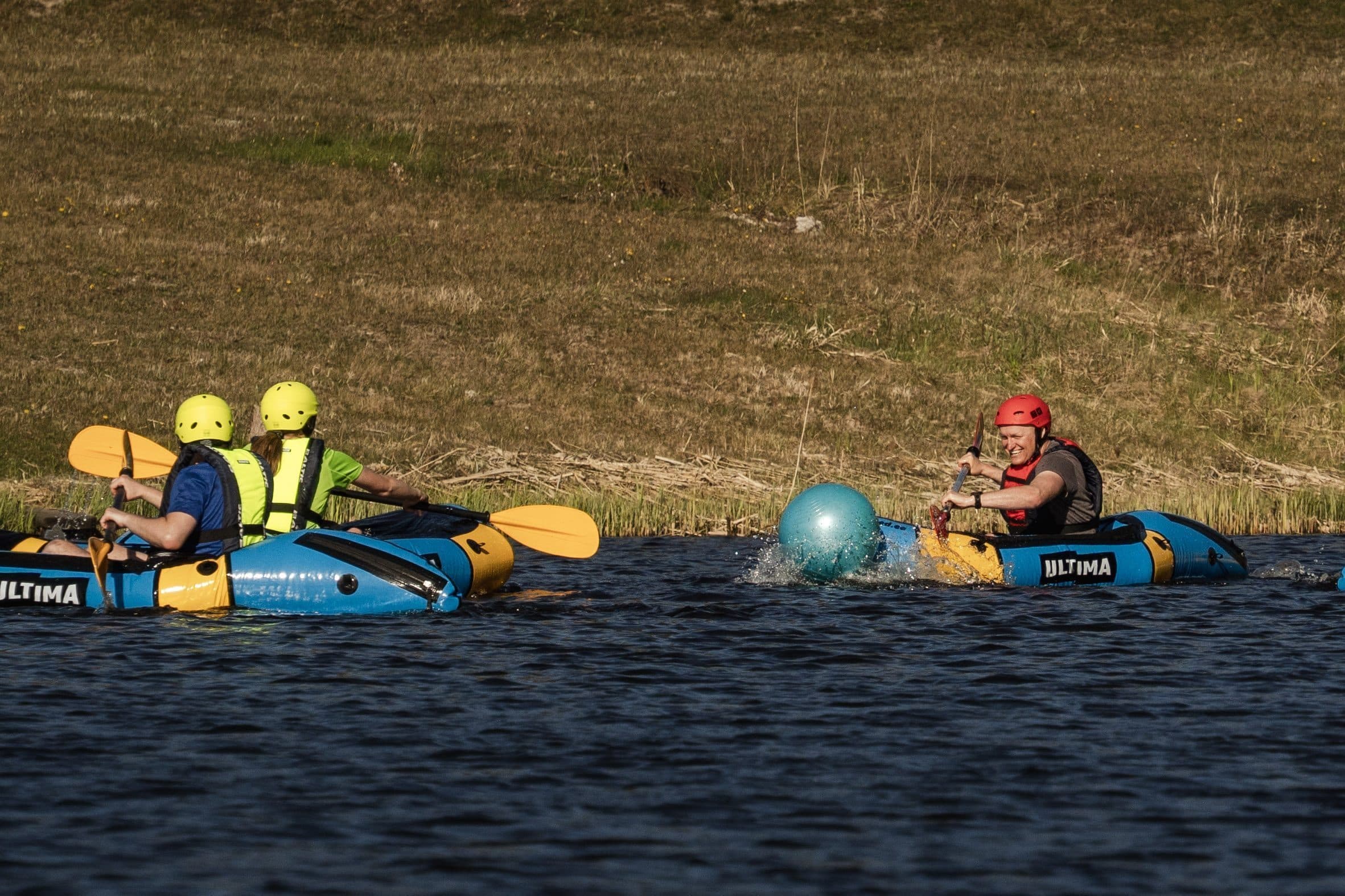
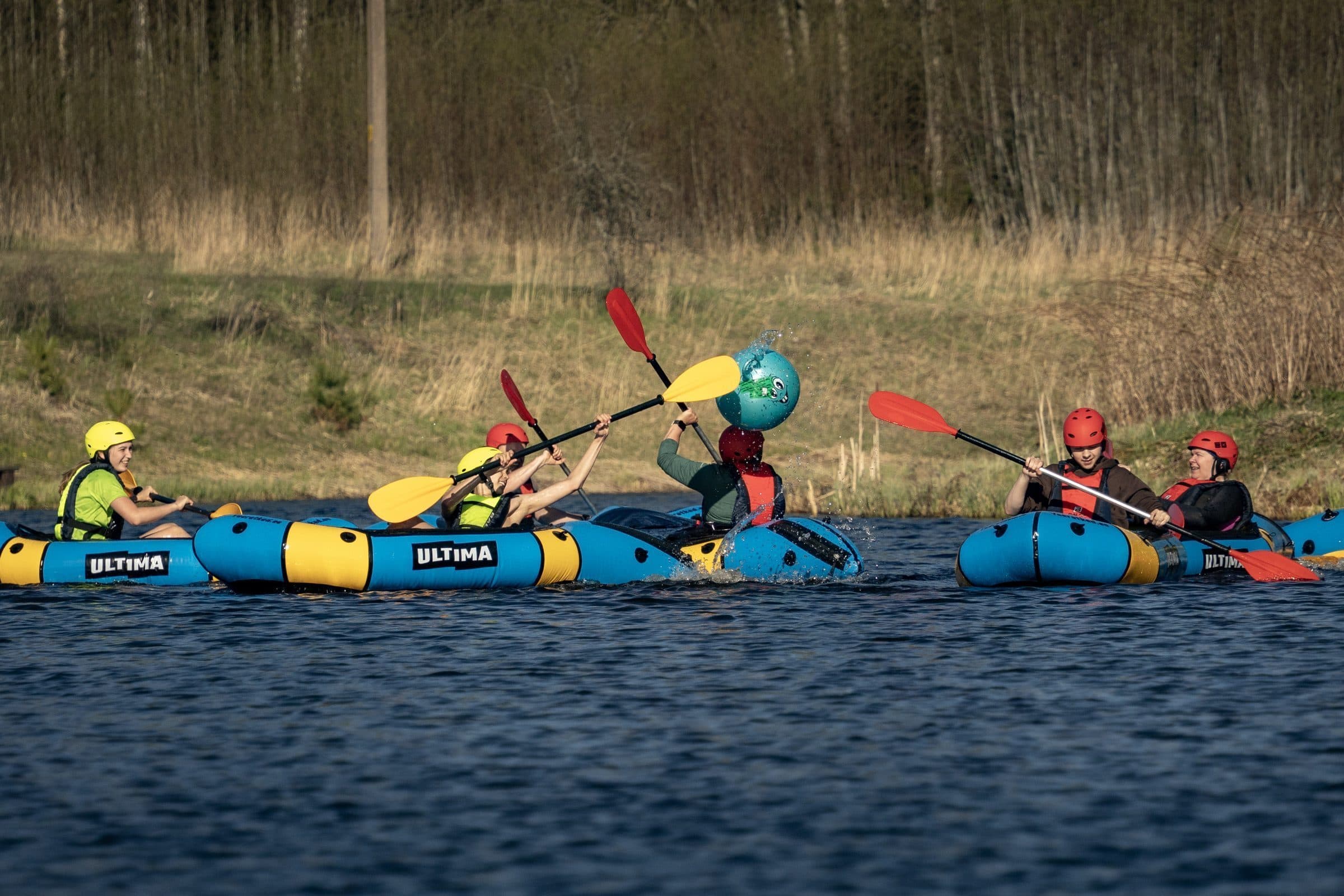
Raftball is a one-of-a-kind ball game in Estonia, played on packrafts on calm, open water. Players from two competing teams paddle their packrafts and battle to knock the ball into the opposing goal — with paddles serving as both the means of propulsion and the weapon of choice.
Raftball is the perfect activity for company summer days, group events, and birthday celebrations. No prior water sports experience is needed — the rules are simple and the game gets going in no time. Our certified guides explain everything on-site and ensure a fun, safe experience for every participant.
Something your team has
never tried before.
Unlike typical team-day activities — paintball, bowling, or adventure parks — Raftball takes place on the water, adding a whole new layer of excitement and unpredictability to the game. And the cooling effect? It comes built-in.
What is Raftball?
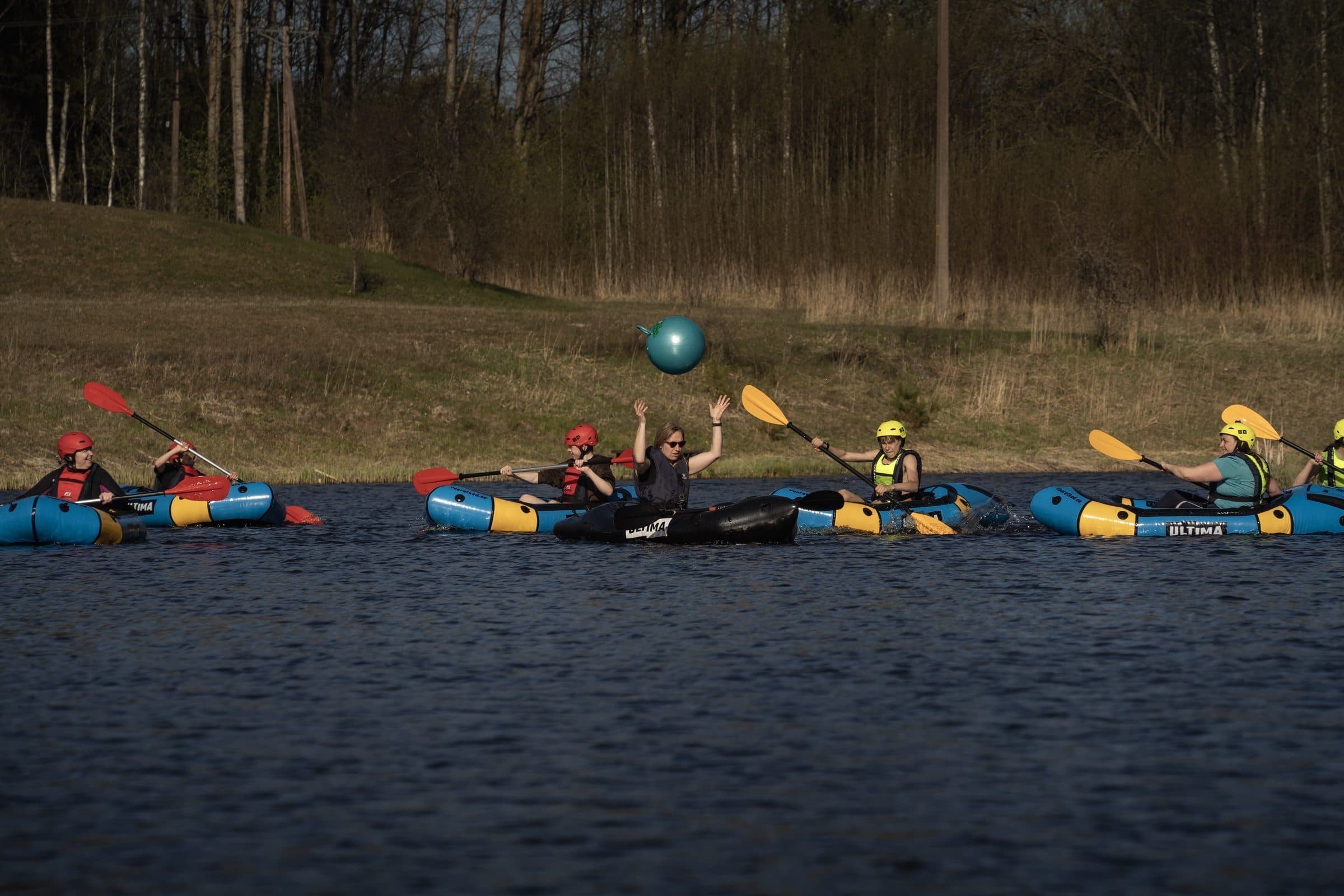
Raftball is Estonia's only packraft ball game, played on calm open water. Two teams paddle packrafts and compete to score by hitting the ball into the opposing team's goal.
Do we need any prior experience?
Not at all. The rules are straightforward, and our certified guides walk everyone through everything on-site. Paddling a packraft is highly intuitive — most players feel completely comfortable within the first minute on the water.
How large does the group need to be?
Raftball works for groups of 6 to 200+ participants. For larger groups, we divide players into teams and run the event in a tournament format.
How long does a Raftball event last?
A typical session runs 2–4 hours, including equipment distribution, a rules briefing, gameplay, and wrap-up. For those who want more, we can organise a full-day tournament programme of up to 12 hours.
Where can a Raftball event be held?
Raftball is suitable for any calm lake, pond, or slow-moving river. We can find the ideal venue for you, or bring the full event setup to a body of water of your choice anywhere in Estonia.
What should participants bring?
We supply all the equipment — packrafts, paddles, life jackets, and helmets. We do recommend bringing a swimsuit or a change of clothes, because getting wet is pretty much guaranteed.
Raftball — Official Rulebook
Objective
Raftball is a water ball game in which players sit in packrafts and try to hit the ball into the opposing team's goal. The aim is to score more goals than the opponent.
Playing area
The game is played on a lake, pond, slow-flowing river or pool area. Recommended depth: at least 1 m across the entire playing area. The field is not bounded. Goals are placed at opposite ends and anchored to the bottom. Goal size is not fixed.
Teams
Two teams, recommended 3–5 players on the field. Substitutes are allowed (flying substitution from the bank or substitution zone). There is no goalkeeper.
Playing time
Two halves of 7 minutes each, with a break between them. Teams switch ends at half-time.
Equipment
Packraft and paddle for each player. Mandatory life jacket and helmet. Ball: large, soft, floating gymnastics ball.
Playing the ball
The ball may be pushed, directed and struck with the paddle. Touching the ball with hands is not allowed (except when taking a penalty). If the ball lands in a boat, it must be immediately knocked out with feet or paddle. You may not paddle while holding the ball — the boat must be stationary. A goal counts when the ball crosses the lower goalpost.
The goal
The goal must not be touched. Deliberate contact with the goal → penalty for the opponent. Accidental contact as a result of a ram does not count.
Contact and ramming
Ramming with a packraft is allowed from any direction. Hitting, grabbing or pushing — with hands or paddle — is prohibited. Accidental contact during paddling is allowed as long as it does not result in direct contact with a player. Contact with a player (not a boat) → penalty for the opponent.
Penalty
All infringements that stop play are punished with a penalty. The ball is thrown up by hand and struck with the paddle. Defenders must retreat two boat-lengths. If the infringement occurs within two boat-lengths of the goal, the penalty is taken from three boat-lengths. In the event of a draw, the winner is decided by a penalty shoot-out — alternating shots until a winner emerges.
Sanctions
A penalty is awarded for: playing the ball with hands, paddling while holding the ball, deliberate contact with the goal, contact with a player, and general rule violations. Repeated or dangerous violations → player removed for 2 minutes; repeated again → removed from the game.
Safety
Players must be able to swim and must wear a life jacket and helmet. In the event of a capsize, the player climbs back in unaided or is assisted. The referee observes from the bank or a separate boat. The game is suspended in bad weather, lightning or excessively cold water.
Winner
The team that scores more goals wins. In the event of a draw, the game is decided by a penalty shoot-out.
We can have a proposal ready for you within 48 hours. Just send us your group size, preferred date, and location.
Get in touch →