
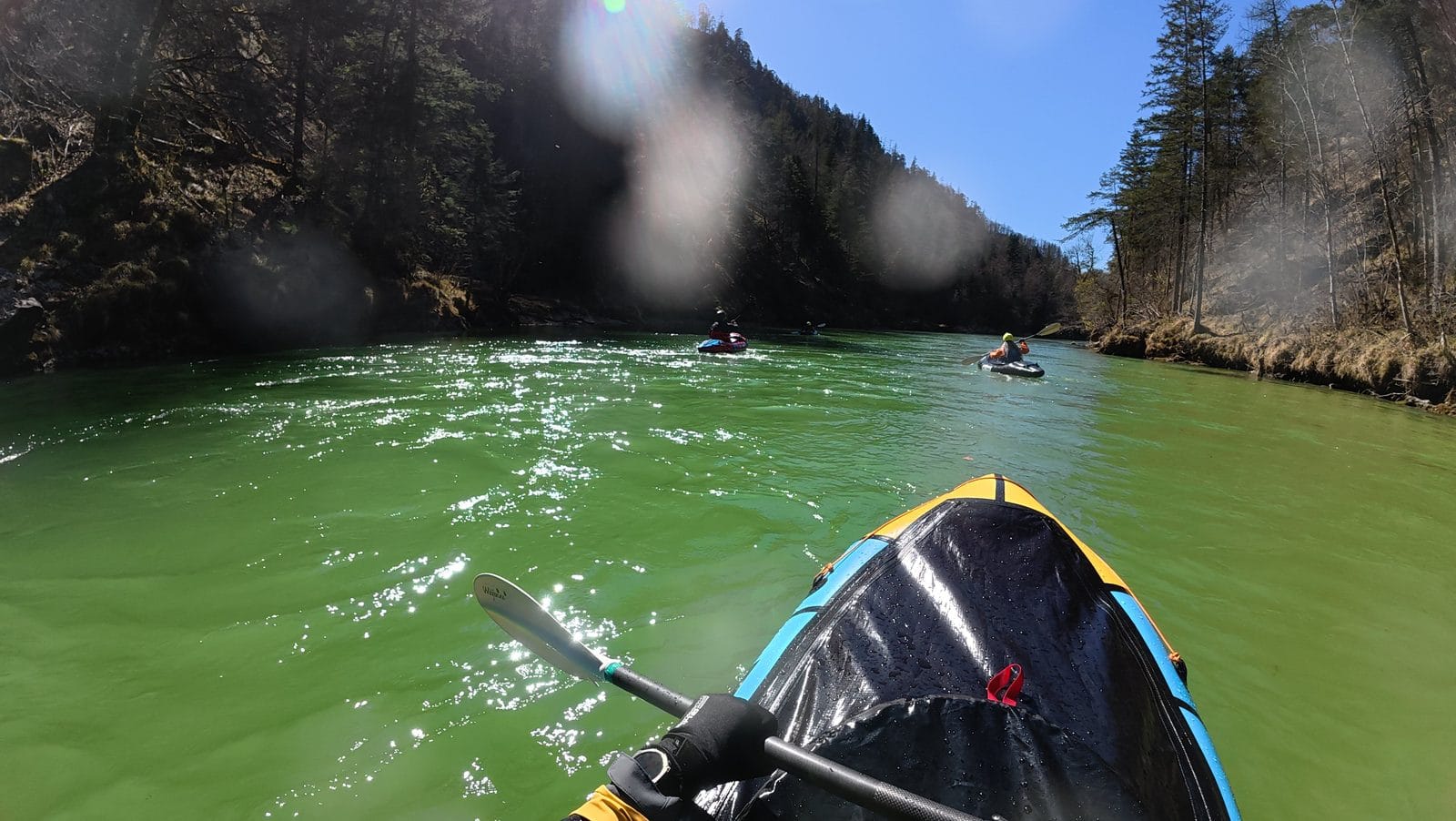
For over a year, the idea had been nagging at me: get some packrafts. Those featherlight inflatable boats that weigh under 4 kg, pack into a backpack, and go wherever you go. I'd spent hours scouring the internet and reached out to several manufacturers, but the conversation that stuck was with the owner of Ultimate Packraft. He was the one who invited me to come and test his boats in person.
A couple of good friends and I decided: let's do it. It was quite the haul across Europe, but we made it. The first river was the Vltava — a popular tourist river for the locals. In summer it's packed with paddlers, but when we arrived, we had it entirely to ourselves. Most of the riverside bars were shut, save for one where we soaked up the spring sunshine and grabbed a beer before pushing on.
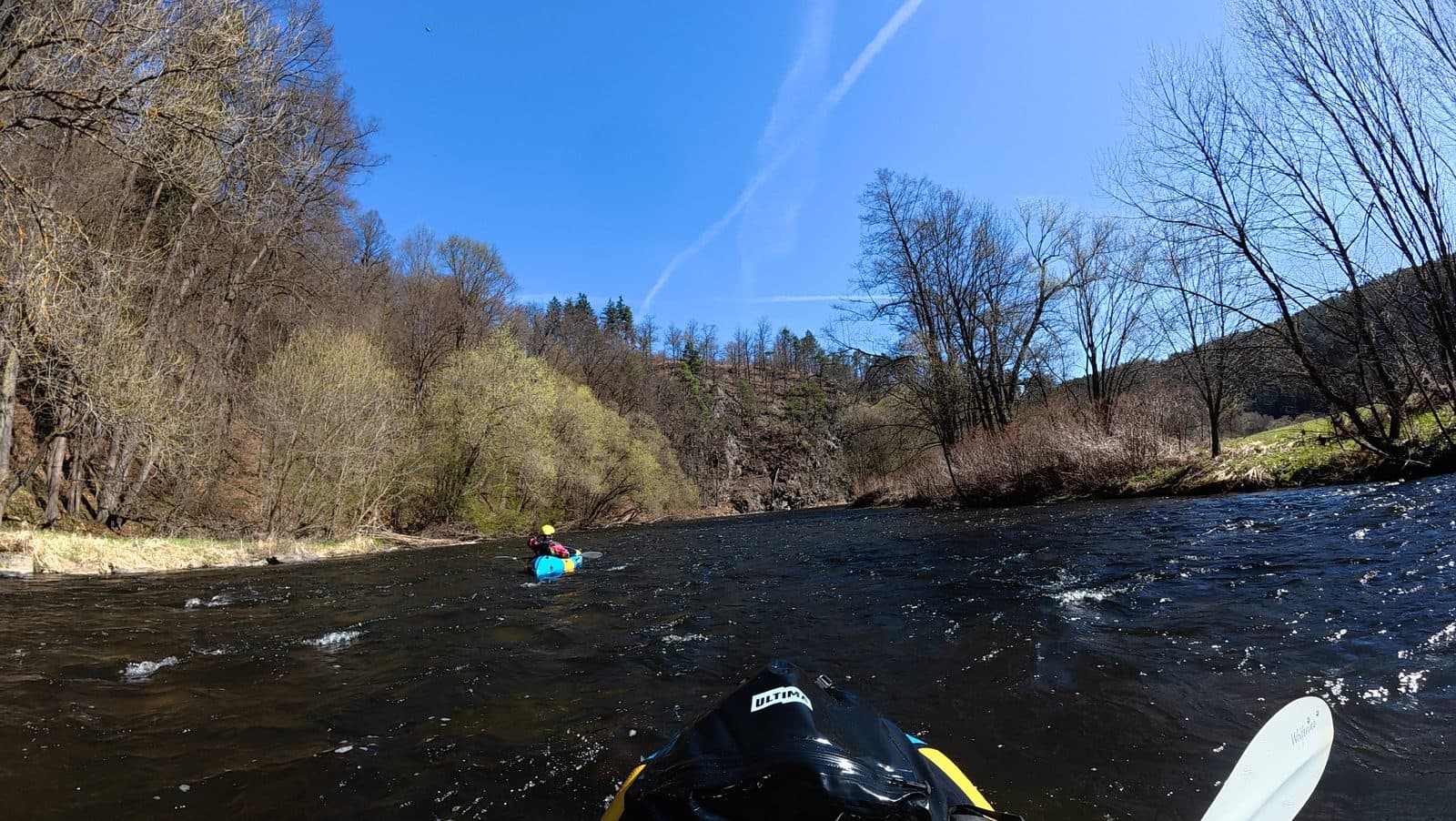
Paddling a packraft on the Vltava river
The river itself ran fast and was full of what I'd call rapids by Estonian standards. Jan, our contact, just grinned and said those weren't rapids — just a bit of ripple. "The Salza has rapids," he added. And so that evening we headed for the Austrian Alps. The drive alone was an adventure: winding mountain roads twisting up and down, arriving in the dark. A quick plan with Jan and his friends, then off to sleep.
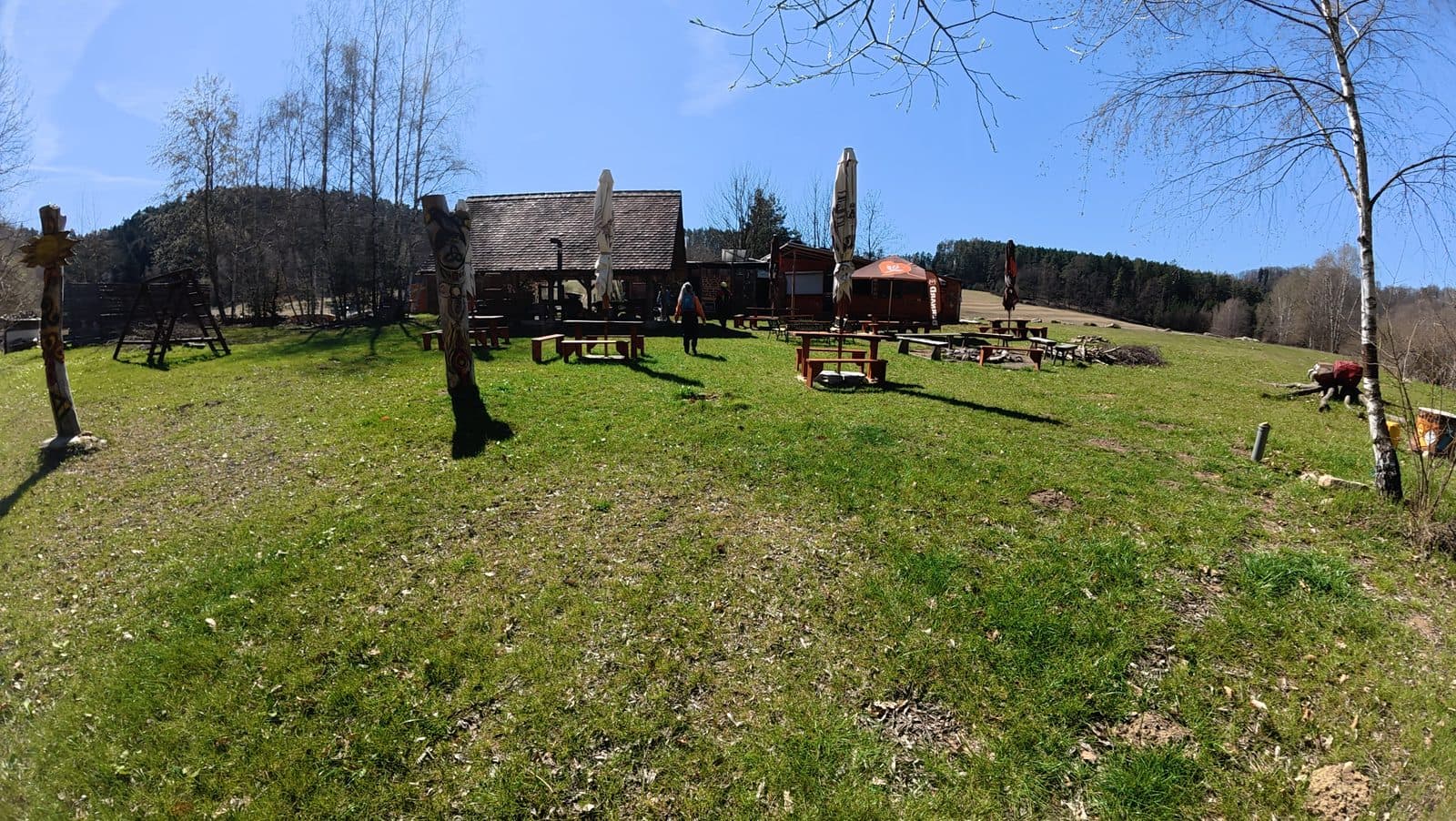
A riverside cabin by the water
Morning started straight away with the boats. We shuttled the car to the takeout so the return would be easy, and then we were on the water. My eyes had never seen a river like that — at first, it was genuinely a little daunting. But in the end? Absolutely incredible. The nerves faded fast, replaced by a hunger for even bigger waves. Packrafts are so much more forgiving than kayaks. The stability is on another level — where a kayak will often flip when you're threading through rocks in fast current, a packraft lets you play around and figure it out.
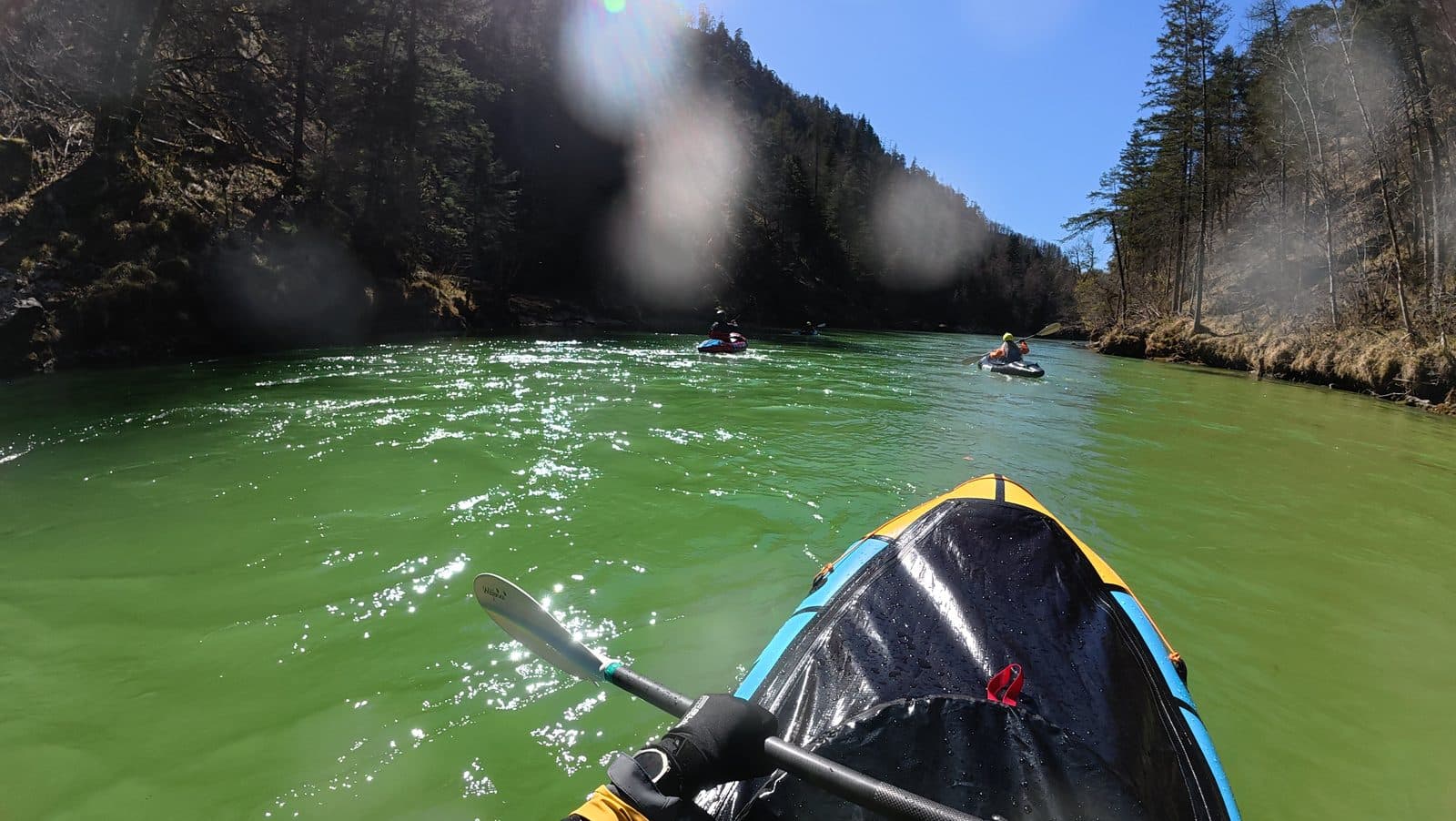
The Salza river in Austria — emerald green water rushing through the Alps
We covered 26 km at a blistering pace — 4 hours including two longer breaks. My watch clocked a top speed of nearly 17 km/h. Absolutely insane. Shame you can't charge down the Võhandu like that. We were buzzing, packed up the boats, and headed back to the Czech Republic.
The next day was set aside for Český Krumlov — a UNESCO World Heritage old town. And no, we didn't just wander around with cameras. The same Vltava flows right through the town, and the packrafts were with us. There were several fun drops and sluices to run. Plenty of laughs, a proper look at the old town, and a local schnitzel to round it off. A note for beer lovers: a good draught beer in the restaurants runs about €2.50 — completely unreal compared to back home.
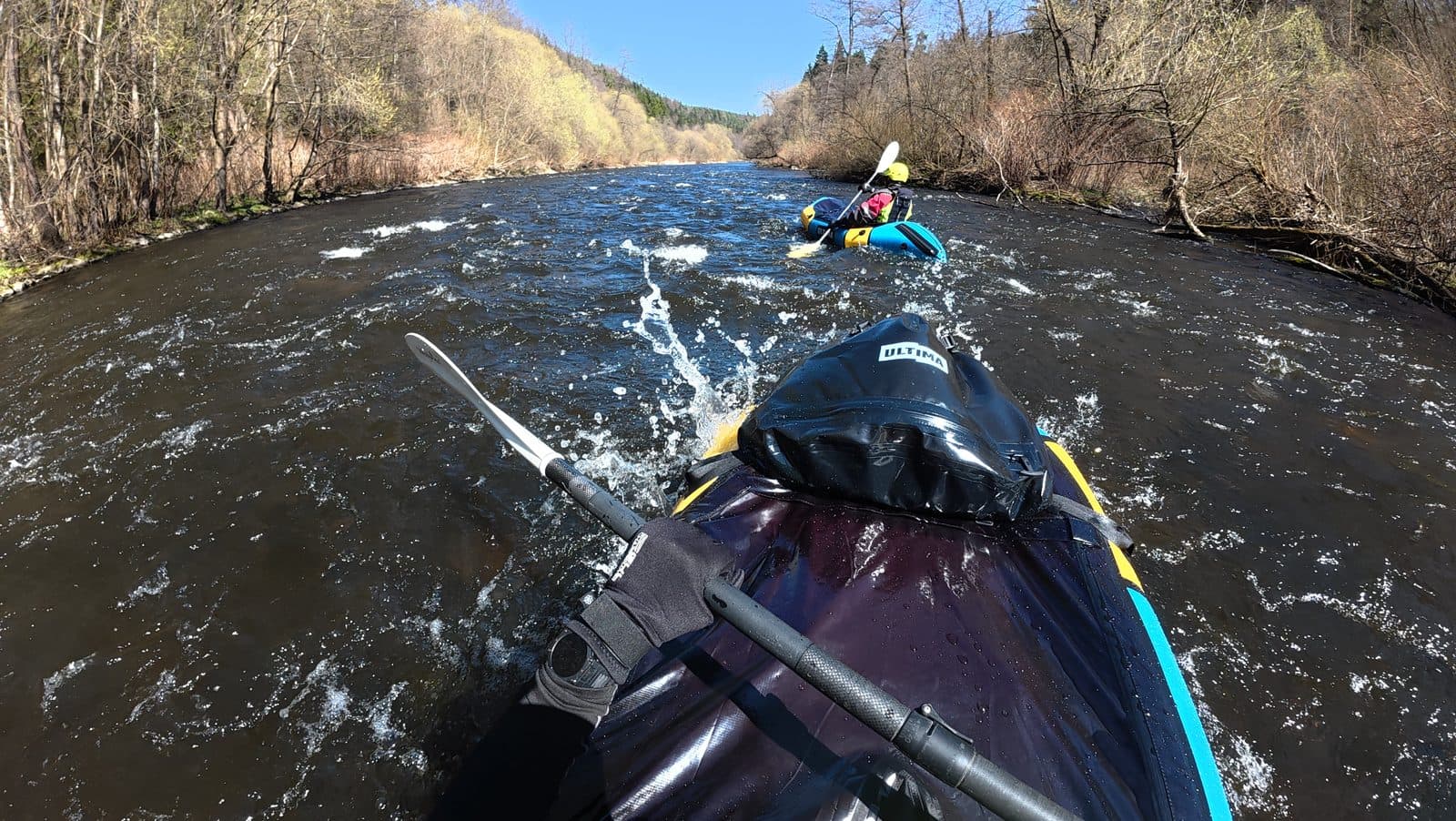
Packrafting a rapid on the Vltava river
The final day took us near České Budějovice, where a canal had been built off a side channel of the Vltava. At certain times of day, they release water into it and it turns into a raging rapid. The weather turned ugly — sleet and all. Fresh off the Salza, we figured we were seasoned pros by now — how hard could one little canal be? We found out pretty quickly that this place was a different beast entirely. Jaan and Rena flipped fast and swam a good chunk of the canal. I managed to stay upright, but only just — I lost my line several times and ended up in spots I had absolutely no intention of being in. I finally crawled to the finish, completely spent. The intensity wrung me out thoroughly, and that one run was enough for me.
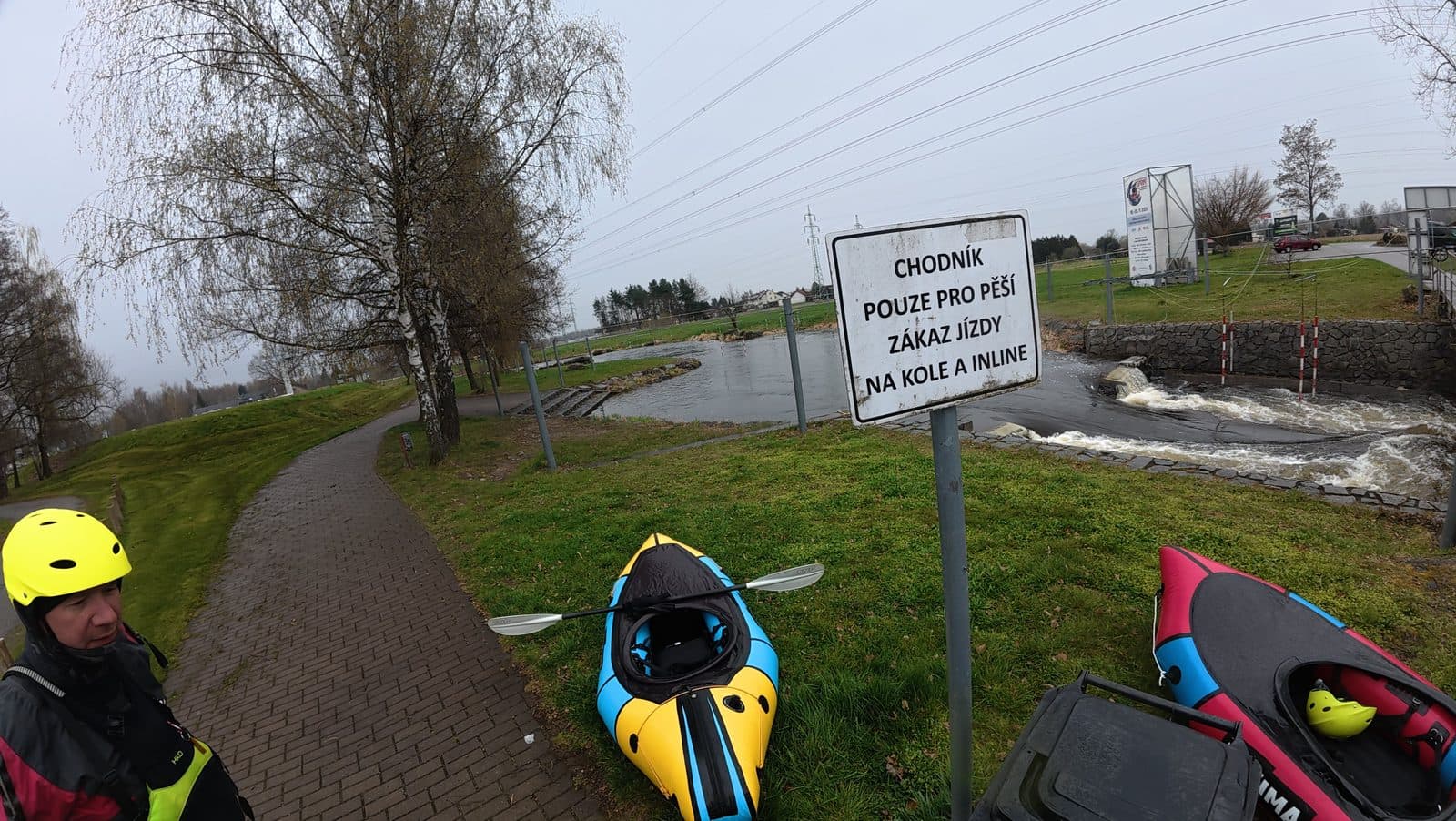
Kayaks lined up along the edge of the canal
Then it was time for one last lunch with Jan, a heartfelt thank-you for everything, and the long drive home — with ten packrafts somehow crammed into the car. Three days later, we were back. We made a stop in Latvia on the way to paddle the Valmiera rapids, but after everything we'd experienced, it felt like floating on still water.
Until the next adventure!